Haunting Encounters
Police Entered a Haunted Apartment in Madrid. Something Opened the Cabinet Door.
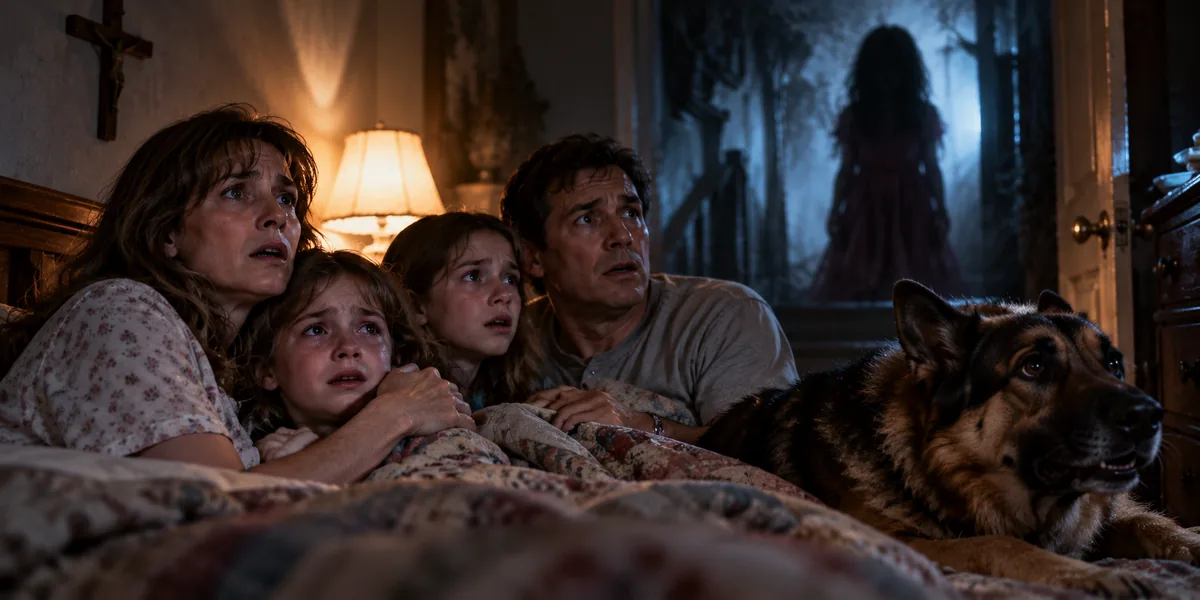
In November 1992, a family in Madrid became so scared of their own home that they called the police in the middle of the night. Crucifixes had turned upside down, strange figures had appeared, and something had left deep scratches across a poster. By the time officers arrived, the family was waiting outside in the cold, afraid to go back in.
Inspector José Pedro Negri took the call seriously enough to enter the apartment with his officers. They sat down with the family and began listening to what had happened. Within minutes, something occurred in the living room that Negri would still be talking about twenty years later.
The Ouija Session at School
The story began in 1990 with a teenager named Estefanía Gutiérrez Lázaro. She and two classmates had gathered around a Ouija board at their school in Vallecas, a working-class district of Madrid. They were attempting to contact a young man who had died.
A teacher interrupted the session and broke up the gathering. Estefanía’s mother, Concepción Lázaro, later described a detail that the girls had brought home with them. Smoke had risen from the glass used during the session and moved toward Estefanía’s face.
Afterward, Estefanía began suffering frightening episodes. She experienced convulsions, periods of altered awareness, and visions of figures who wanted her to go with them. Her parents sought medical help as her condition grew worse. On July 14, 1991, Estefanía died at Madrid’s Gregorio Marañón Hospital. She was only 17 years old, and her death devastated the family. But the strange events surrounding her final months were only the beginning of what the Gutiérrez household would experience.
Something Was Still Inside the Apartment
Concepción began hearing her daughter’s voice calling to her from other rooms. On some nights, she woke to the sensation of cold hands touching her body, as though somebody were standing beside the bed. Her younger daughters also had activity in the bedroom they shared.
One night, the girls heard a strange noise near their beds. They saw a dark shape moving low across the bedroom floor, as though something were crawling toward them. Other nights brought terrifying disturbances involving dolls and belongings scattered around their room.
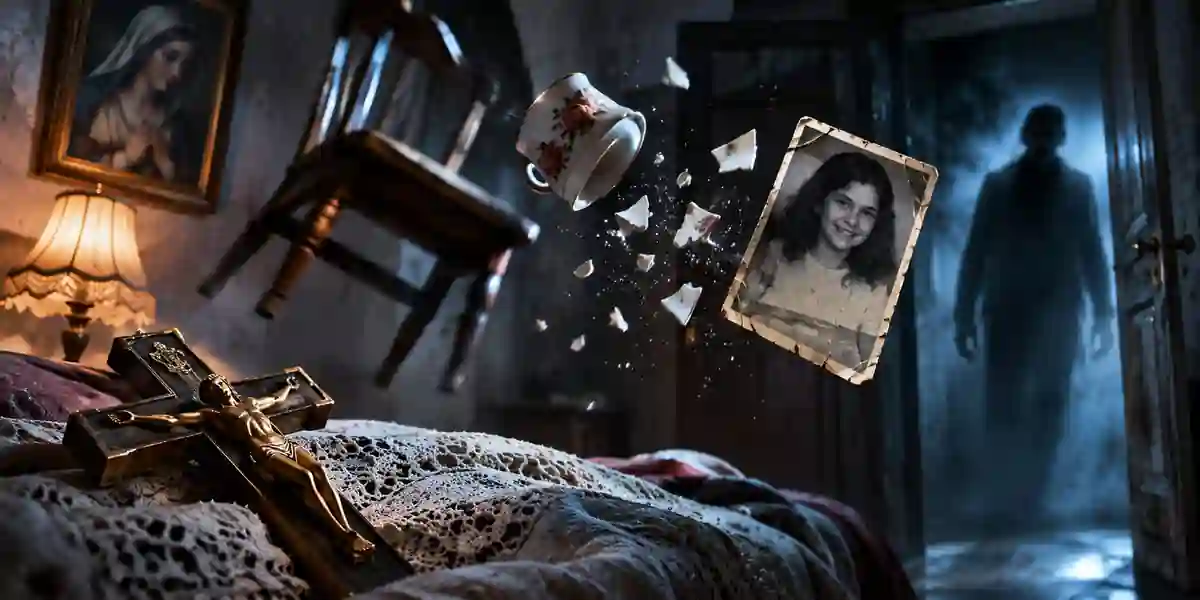
The family’s religious objects began behaving strangely, too. Crucifixes changed position or turned upside down, and a picture of Estefanía was found damaged by fire inside its frame. The family also heard unexplained noises and saw objects moving around the apartment.
Concepción’s husband, Máximo, had been less willing to accept that something supernatural was happening. That changed when he saw a tall, dark figure standing in the hallway. It appeared to have no hair and stood close to two metres tall.
The family brought paranormal investigators into the apartment, hoping someone could help them. Their experiences drew the attention of Spanish newspapers and television crews.
The Night They Called the Police
At around 2 a.m. on November 19, 1992, Máximo finally telephoned Spain’s police emergency number, 091. He described the strange activity in the home, including crucifixes turning over and three large scratches appearing on a poster. He also explained that his daughter had died the previous year and that the disturbances had become unbearable.
The operator struggled to make sense of what he was hearing. He asked to speak with Máximo’s wife and one of their sons, who both confirmed the family’s account. A patrol was sent to the apartment.
Inspector José Pedro Negri arrived to find a family deeply frightened by what was happening. He later remembered Concepción standing outside in the cold with a baby in her arms. He decided to go upstairs and investigate the apartment himself.
Negri and the other officers entered the home and began talking with the family. They gathered in the living room, where a cabinet stood nearby. The officers had no idea that this ordinary piece of furniture was about to become the most memorable part of their visit.
The Cabinet Door Flew Open
While the officers were sitting with the family, the cabinet door suddenly swung open. It had been closed, and the movement was so abrupt that Negri and his colleagues immediately inspected it. The police report described the door opening in a completely unnatural manner.
Before the officers had recovered from the surprise, a tremendous noise erupted from the terrace. They hurried to investigate, expecting to find someone or something responsible for the disturbance. The terrace was empty. Another strange discovery followed in the living room. On a small cloth covering the table that held the telephone, the officers noticed a thick brown substance. Negri described it as something resembling saliva, but nobody could explain it.
The family also showed the police the bedroom where some of the worst things had occurred. A wooden crucifix had been turned around, with the figure of Christ detached from the cross. Nearby, a poster bore three long scratches, and the family described how the religious figure had fallen again after being put back.
The Room That Scared the Inspector
Years later, Negri described another part of the investigation that had stayed with him. He entered the bathroom and experienced an intense sensation of cold, unlike anything he had ever felt before. He left the room trying not to let the family see how shaken he had become.
The police report preserved the events of that night, including the cabinet door, the terrace noise, and the substance found on the telephone table. The document was printed on November 27, 1992, although the emergency call and police visit occurred on November 19. It became one of the best-known records of a suspected haunting in Spain.
The family’s experiences continued attracting attention long after that night. Investigators revisited the story, television programs interviewed the people involved, and the apartment became famous among followers of paranormal investigations. In 2017, the Spanish horror film Verónica drew inspiration from Estefanía’s story.
The Gutiérrez family eventually left the apartment, bringing an end to their years of living in the home. Negri, however, carried the memory of his visit with him long afterward. When he spoke about it on television in 2012, he admitted that the experience had changed something deeply personal: after that night in Vallecas, he had returned to church.