Haunted Places
Ghost Hunters Record a Woman’s Voice Inside a Former Military Hospital
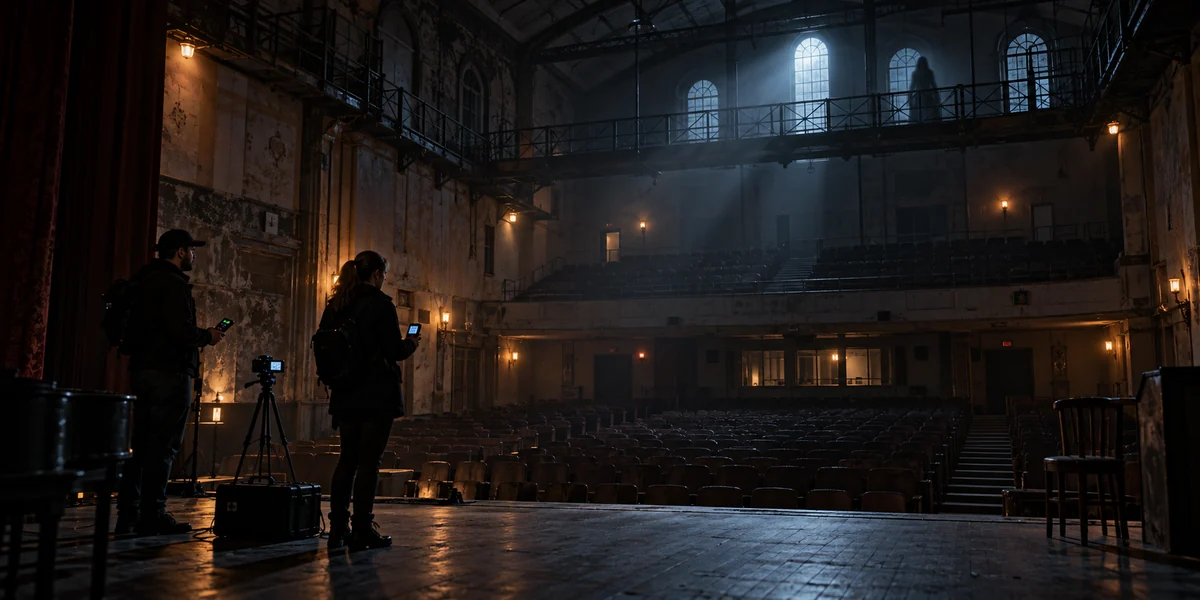
High above the stage of an old military hospital auditorium in Colorado, a metal catwalk runs through the darkness. It’s reached through a projector room where the stairs are blocked by a heavy chain. Employees say they’ve seen a shadowy figure moving up there, even when nobody else was supposed to be around.
It’s one of several strange stories surrounding the historic Fitzsimons Building in Aurora, Colorado. So when two paranormal investigators were given permission to spend a night inside, Bushnell Auditorium was near the top of their list.
They spent hours watching, listening and recording. By morning, they had experienced almost nothing unusual, but their equipment had picked up something they hadn’t noticed.
A Hospital With Decades of Strange Stories
The Fitzsimons Building opened in December 1941, just days before the United States entered World War II. At the time, it was the largest building in Colorado and one of the most modern military hospitals in the country.
For more than five decades, soldiers and their families passed through its enormous network of wards, treatment rooms and corridors. The hospital cared for wounded service members, tuberculosis patients and prisoners of war. President Dwight D. Eisenhower also spent seven weeks recovering from a heart attack there in 1955.
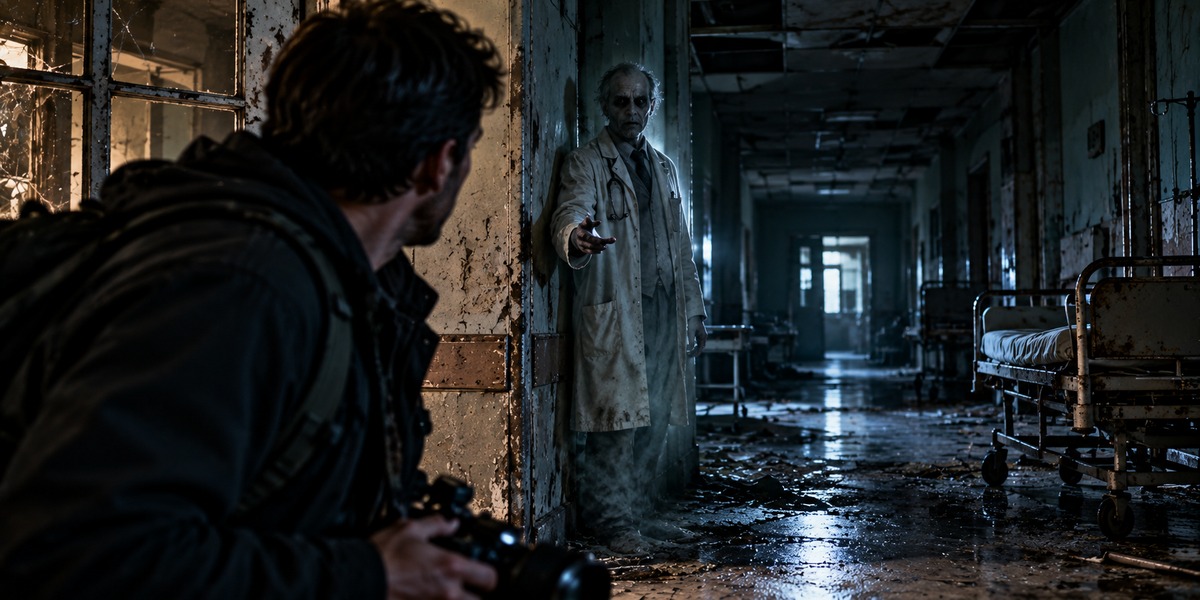
Today, the 480,000-square-foot building houses administrative offices for the University of Colorado Anschutz Medical Campus. But employees who work there have continued sharing stories about things they can’t explain. Some have heard babies crying near the former maternity wards, while others have reported elevator doors opening unexpectedly, secured rooms being found unlocked and shadowy figures appearing in empty areas of the building.
Bushnell Auditorium, on the eighth floor, has earned a reputation of its own. Facilities supervisor Kenneth Bosworth has described feeling watched while standing on its stage. He has also reported seeing a dark figure moving along the metal catwalk above him.
Footsteps, Keys and a Mysterious Stranger
Employee Dan Dix once had an experience on the fifth floor that left him searching for someone who wasn’t there. Dix was working on heating lines with his supervisor when he stopped to inspect something. His supervisor continued down the corridor, and Dix could hear the familiar jingle of the man’s keys nearby.
When he finished, Dix followed the sound toward the elevators. He walked around the elevator bank several times, convinced his supervisor was somewhere just ahead, but the man was actually hundreds of feet away. When Dix caught up and explained what had happened, his supervisor greeted the story with a knowing smile. He welcomed Dix to Building 500, the hospital’s former name.
Another employee described an even stranger encounter during a snowy night at the old hospital. Maintenance technician Leo Czyozanowski had been working as a contract cleaner when he heard footsteps around 1 a.m. He encountered a silver-haired man who began talking about the hospital’s old incinerator.
According to Czyozanowski, the stranger handed him a metal pipe fitting marked “Incinerator 1962.” Before he could respond, the man disappeared. Later, Czyozanowski described the encounter to his father, who had worked at the hospital years earlier. His father recognized the description of someone associated with the incinerator.
Twelve Hours Inside Fitzsimons
In September 2026, Bryan Bonner and Bob Lewis of the Rocky Mountain Paranormal Research Society entered the historic building for an overnight investigation. The pair had spent more than 20 years examining reports of unusual activity around the Rocky Mountain region.
They knew they couldn’t cover the entire hospital in one night, so they concentrated on two locations with long histories of strange experiences. One was Bushnell Auditorium, while the other was the Eisenhower Suite, the rooms where the president had recovered from his heart attack.
The suite had attracted attention because employees had repeatedly found its secured doors open when they should have remained locked. Bonner and Lewis installed audio recorders, video cameras, motion sensors and thermal equipment. They also tracked temperatures, vibrations and electromagnetic fields while keeping records of their own movements.
Two facilities employees assisted during separate shifts, ensuring that someone familiar with the building was present throughout the investigation. The hours passed quietly, with their instruments recording ordinary changes in temperature and vibrations from the heating and ventilation system.
The investigators saw no figures, moving objects or doors opening by themselves. After approximately twelve hours, they packed up their equipment and left, unaware that their recordings contained something worth a closer look.
Two Taps and an Unfamiliar Voice
During their review, Bonner and Lewis discovered two unexplained sounds captured around 2 a.m. The first was faint whistling that neither investigator remembered making. Nobody had drawn attention to the sound during the night.
The second recording came from Bushnell Auditorium, where a microphone captured two distinct taps followed by a brief sound resembling a woman’s voice. The words were difficult to make out, although the investigators thought they heard something like “shee-soo.” Only three men were on the floor at the time. Nobody remembered hearing a woman speak, and the investigators couldn’t identify where the sound had come from.
The recording was brief, but its location made it intriguing. Employees had previously reported feeling watched in the auditorium and seeing figures along the catwalk above its stage. Bonner and Lewis had spent the night listening for unusual activity, yet the two sounds had passed without anyone noticing. They decided to play the recordings for the university community and explain what their investigation had uncovered.
A Familiar Tune and Another Strange Incident
In October, nearly 250 faculty members, employees and visitors gathered on campus to hear the investigators present their findings. Bonner and Lewis described the overnight session, explained how their equipment worked and played the sounds captured inside Fitzsimons.
The possible woman’s voice drew attention, but it was the whistling that prompted an unexpected response. An audience member said the melody reminded them of an old military song, “The Army Goes Rolling Along.” Their father had once whistled the tune, but chronic lung disease had prevented him from whistling or singing it for more than a decade. Hearing the recording brought the song back to mind.
The connection was personal, especially given the building’s long history of caring for American service members. It also gave the audience another reason to think about the unexplained sounds heard that night. Bonner shared a separate incident that had happened after he left the hospital. While driving on Interstate 70, he said, his car’s electrical system had suddenly failed. As he described what happened, his lapel microphone stopped working.
For a room full of people already listening to recordings from a supposedly haunted building, the timing was hard to ignore.