Haunting Encounters
After a Tsunami, Taxi Drivers Started Picking Up Dead People
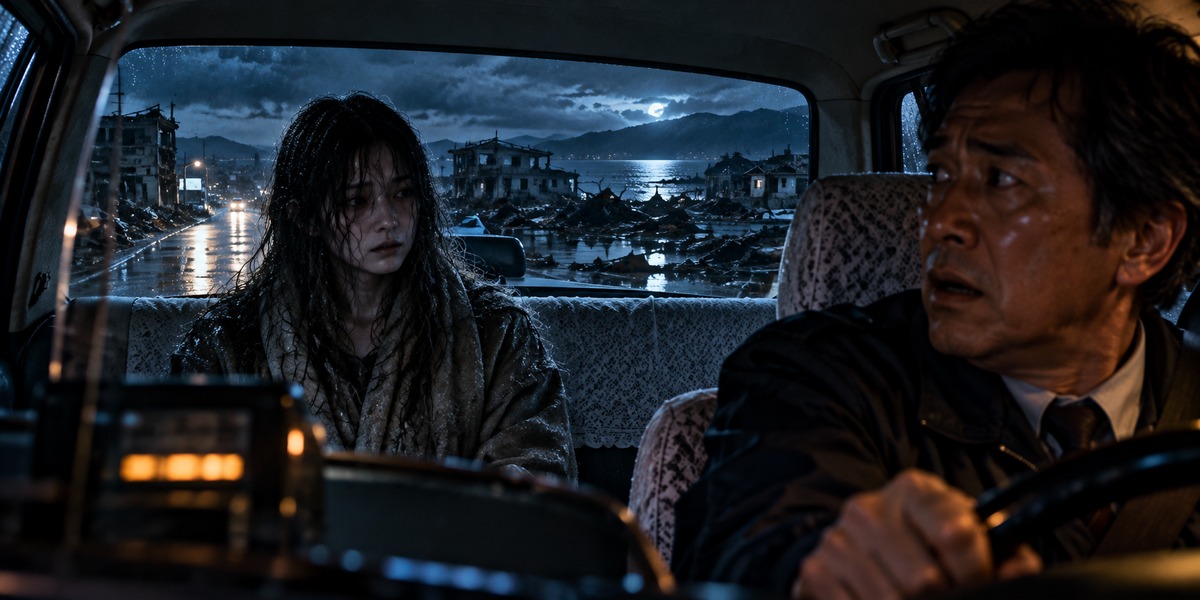
The young woman was wearing a heavy coat, even though it was summer. She climbed into a taxi near Ishinomaki Station in Japan and asked the driver to take her to Minamihama.
The driver was surprised. Minamihama had been devastated by the tsunami only a few months earlier, and much of the neighbourhood was gone. He asked whether she was sure she wanted to go there.
The woman went quiet before asking him a question he would never forget. “Am I dead?”
There Was Nobody in the Back Seat
The driver turned around to look at his passenger. The back seat was empty, and he had no idea where the young woman had gone.
He hadn’t stopped to let her out or heard a door open. As far as he was concerned, she had climbed into his taxi like any other customer, told him where she wanted to go and disappeared during the journey.
It happened in the months following March 11, 2011, when a massive earthquake off Japan’s northeastern coast triggered a devastating tsunami. Thousands of people died, and entire neighbourhoods in Ishinomaki were swept away.
Minamihama was among the hardest-hit areas. Houses, shops and familiar streets had disappeared, leaving behind a landscape that residents would barely have recognized.
The driver later shared his experience with a university student who was researching unusual encounters after the disaster. And his wasn’t the only story she heard.
Another Driver Picked Up a Young Man
A second driver, a man in his forties, described picking up a young male passenger who seemed to be in his twenties. When asked where he wanted to go, the young man didn’t give an address. He simply pointed ahead, indicating that the taxi should keep moving.
The driver asked again, and eventually the passenger said he wanted to go to Hiyoriyama, a hill overlooking Ishinomaki. The driver followed his instructions and completed the trip.
But when he turned around to collect the fare, the passenger had vanished. The young man had been sitting behind him during the journey, yet somehow he was gone without the driver noticing him leave.
It was the kind of experience that stayed with someone. And as a student named Yuka Kudo would discover, several other drivers had stories of their own.
A University Student Started Asking Questions
Kudo was studying sociology at Tohoku Gakuin University when she began visiting Ishinomaki to interview taxi drivers. She wanted to learn about their experiences in the years following the disaster.
She approached more than 100 drivers, asking whether anything unusual had happened while they were working. Some refused to discuss the subject, and others became irritated by her questions. Eventually, seven drivers agreed to tell her about passengers who had apparently disappeared from their taxis.
The accounts didn’t all follow exactly the same pattern. Some passengers gave clear destinations, while others seemed confused about where they wanted to go. But the drivers described people who looked perfectly ordinary when they climbed into the cars.
There was another detail that made Kudo curious. These weren’t just stories about strange figures glimpsed through a windshield. The drivers had actually started taking the passengers somewhere.
The Drivers Had Turned On Their Meters
All seven drivers told Kudo they had started their meters when the mysterious passengers entered their taxis. They had treated the encounters as regular fares right up until the moment something unexpected happened.
One driver even showed Kudo a record of an unpaid fare connected with his experience. He had kept track of the journey just as he would with any other customer who left without paying.
For Kudo, those ordinary details made the stories especially interesting. The drivers weren’t describing distant shapes or brief glimpses of someone in the dark. They remembered accepting passengers, hearing their destinations and driving through the city with them.
And when Kudo asked how they felt about the encounters, some of their answers surprised her.
The Drivers Weren’t All Frightened
Kudo had expected the stories to be frightening. After all, the drivers believed they had encountered people who might already have died.
But several spoke about their passengers with sympathy rather than fear. They seemed more concerned about where the people had been trying to go than about the strange way the journeys had ended.
The young woman asking to visit Minamihama was especially difficult to forget. She had wanted to return to a neighbourhood that barely existed anymore, and her question about being dead seemed to reveal that she didn’t understand what had happened.
Other passengers appeared to have familiar destinations in mind. They weren’t described as threatening anyone or trying to frighten the drivers. They simply seemed to need a ride.
Some drivers even said they would happily pick up the same passengers again if they appeared. Whatever they believed they had encountered, they didn’t regret stopping for them.
The Stories Reached People Around the World
Kudo’s research became part of a Japanese book published in early 2016 about spiritual experiences following the earthquake and tsunami. After The Asahi Shimbun reported on her interviews, the stories spread far beyond Ishinomaki. Newspapers around the world began writing about the disappearing passengers, and people became fascinated by the drivers’ accounts.
The taxi stories were part of something much bigger. In the years after the disaster, other residents reported seeing lost relatives or encountering people they believed had died in the tsunami.
Some survivors spoke with Buddhist priests about their experiences, while researchers collected personal accounts from people still living in the affected communities. The stories became part of the way people remembered those who had been lost.
Kudo’s interviews stood out because the encounters happened during ordinary working days. The drivers weren’t searching for ghosts. They were earning a living, taking people where they wanted to go.
One driver had even kept the record of a fare that nobody paid.
And some were willing to take those passengers wherever they needed to go again.