Haunted Places
She Followed the Woman in Black Through the House
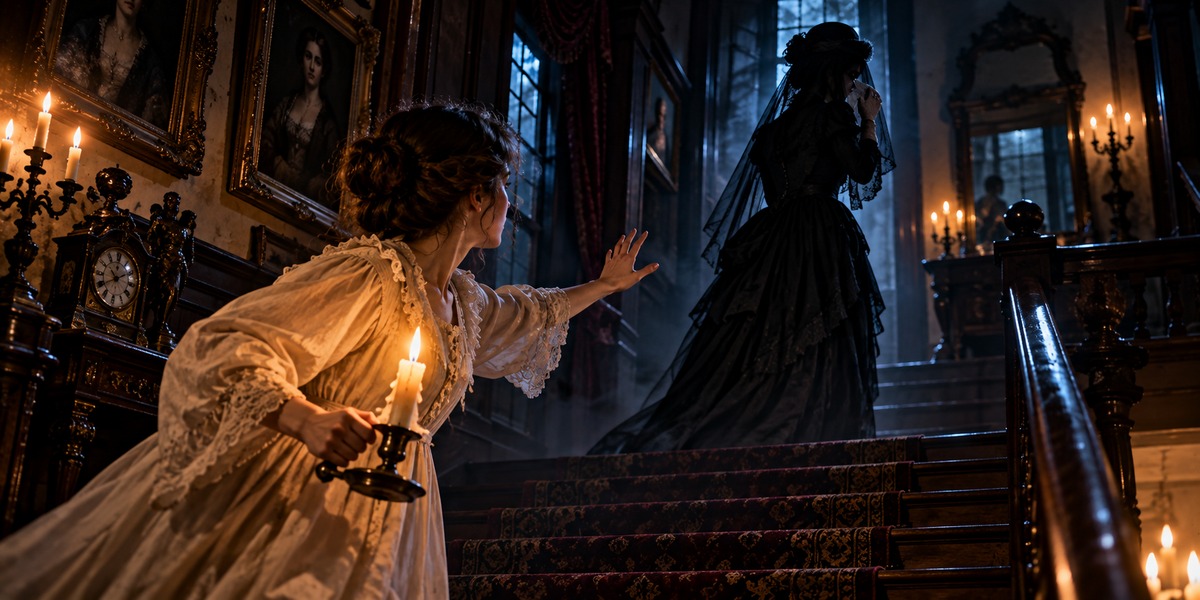
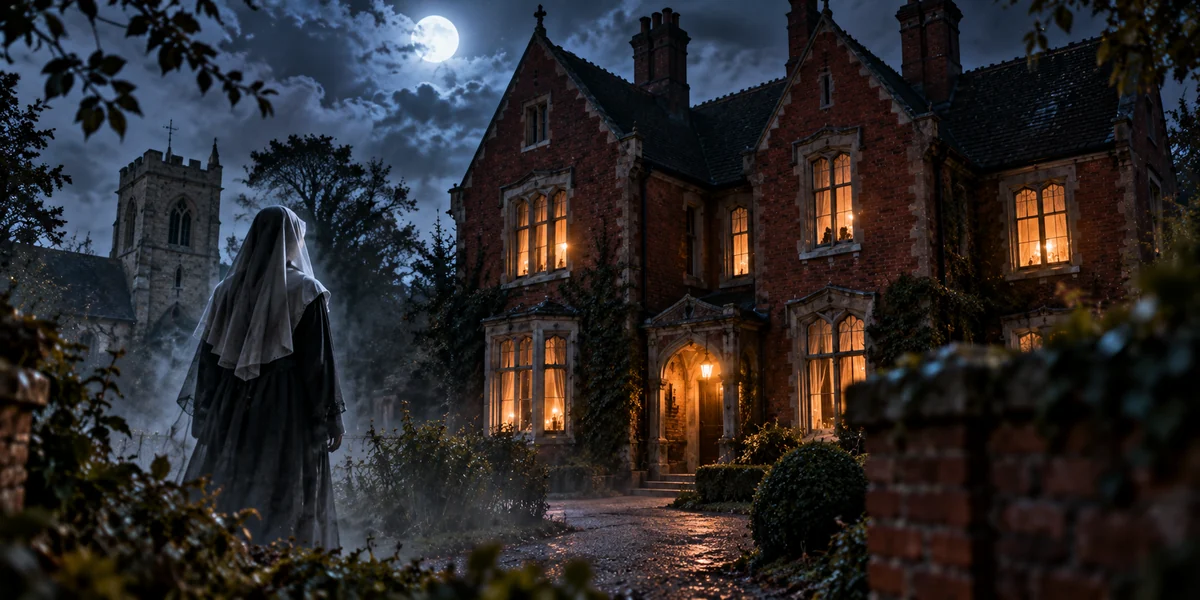
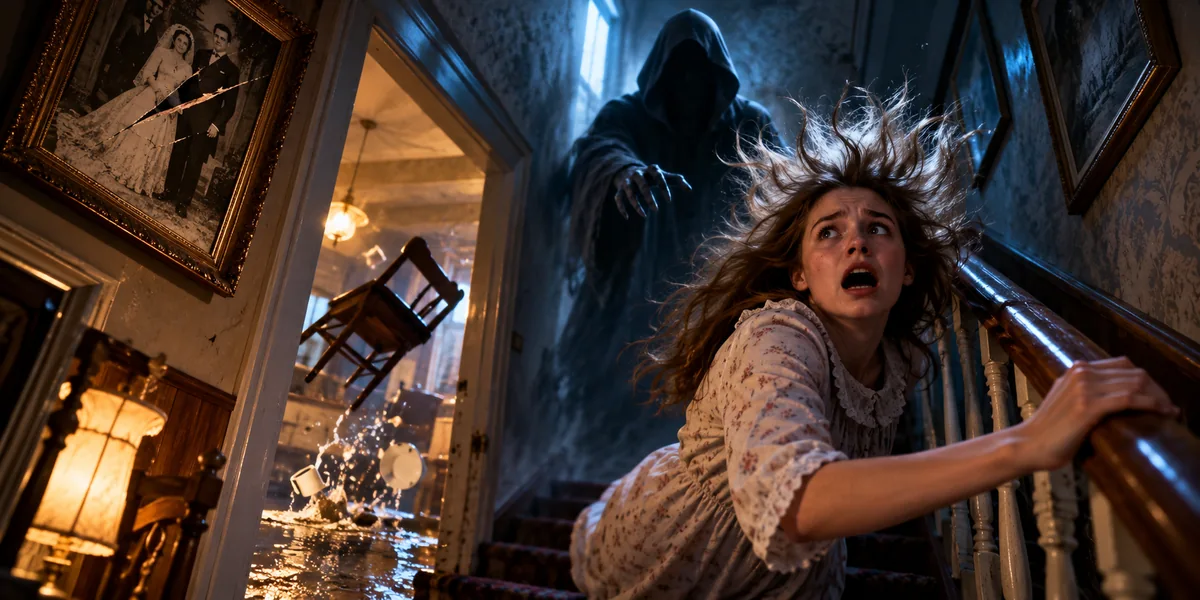
Rosina Despard heard someone outside her bedroom door and went to see who it was. She thought it might be her mother, but when she opened the door, nobody was there. A few steps down the passage, she spotted a tall woman dressed entirely in black, standing at the top of the stairs.
The stranger began walking downstairs, and Rosina followed her. She had only a small piece of candle to light her way, and before she could get very far, it burned out. Unable to see where the woman had gone, Rosina returned to her bedroom.
It was a strange encounter, but Rosina had no idea how familiar that woman was about to become.
The Woman at the Top of the Stairs
It was June 1882, and nineteen-year-old Rosina had been living with her family in a large house in Cheltenham, England, for about three months. Her father, Captain Frederic Despard, had moved there with his wife and six children.
Rosina remembered the woman’s clothing in remarkable detail. Her long black dress looked like soft wool, and she wore the white cuffs associated with Victorian mourning clothes. She held a handkerchief over most of her face, leaving only part of her forehead and hair visible.
Over the next two years, Rosina saw her about half a dozen times. The woman usually came downstairs, entered the drawing room, and stood beside a large window. Eventually, she would walk down the passage toward the garden door and disappear.
Rosina began paying attention to her movements, hoping to work out what was happening. Instead of running away whenever the woman appeared, she started following her.
Other People Began Seeing Her
In the autumn of 1883, a housemaid reported seeing a woman in black moving through the house. She thought a stranger had somehow entered the building, but a search turned up nobody.
Around the same period, Rosina’s younger brother and one of his school friends were playing outside when they looked through the drawing-room window. They saw a woman dressed in black sitting at a writing table, holding a handkerchief against her face.
The boys hurried inside to find out who she was, but the room was empty. Other family members also reported encounters, sometimes hearing footsteps when nobody was walking nearby.
One evening in July 1884, Rosina was reading in the drawing room with her father and sisters nearby. She watched the woman enter, cross the room, and stand behind the couch for roughly half an hour. Nobody else in the room appeared to notice her.
Rosina Tried Talking to Her
By January 1884, Rosina had become bold enough to approach the woman directly. During one encounter, she watched the figure walk toward a sofa and asked whether she could help her.
The woman moved as though she intended to answer, but Rosina heard only a slight gasp. On another occasion, she appeared to hesitate when Rosina spoke, almost as though she wanted to say something but couldn’t get the words out.
These encounters only made Rosina more curious. She had a woman walking around her house who seemed aware of her presence, yet couldn’t explain who she was or why she was there.
She Started Setting Traps
Rosina decided to try something more practical. During May and June 1884, she stretched fine threads across the stairs at different heights, fastening them in place with glue.
She knew the route the woman usually took and placed the threads directly across her path. If an ordinary person walked through them, they should break or come loose.
According to Rosina’s account, the figure passed through the area without disturbing them. She also tried getting close enough to touch the woman, but every attempt failed.
Rosina wasn’t ready to give up. Having watched the stranger move through the house so many times, she decided to follow her more closely.
The Woman Had Nowhere Left to Go
On one occasion, Rosina followed the woman until she reached a corner where there appeared to be no ordinary way out. This was the opportunity Rosina had been hoping for.
She moved closer, expecting to finally reach the stranger. Instead, the woman vanished right in front of her.
What puzzled Rosina was that the figure never seemed to hurry. She walked at a slow, steady pace, yet following her closely enough to make contact proved impossible.
Even her footsteps were unusual. Most of the time they were barely audible, although Rosina could hear them more clearly when the woman crossed the linoleum.
Even the Dogs Behaved Strangely
The family’s pets also had some unsettling experiences. A small Skye terrier, which often slept on Rosina’s bed, occasionally ran toward the bottom of the stairs, wagging its tail as though someone familiar was about to pet it.
Its excitement would suddenly turn to fear. The little dog backed away, trembling, and sometimes hid under furniture.
The family’s retriever also behaved strangely. The cook reportedly found it terrified on several occasions, and it sometimes returned from the orchard looking badly frightened.
She Even Tried Taking a Picture
The haunting eventually attracted the attention of Frederic W. H. Myers of the Society for Psychical Research, an organization that investigated unusual experiences.
Myers encouraged Rosina to try photographing the woman. She kept a camera ready, hoping to capture one of the appearances, but photography in the 1880s was difficult indoors. The long exposures needed in poor light made getting a clear picture nearly impossible.
Rosina never managed to photograph her. Simply waiting for the woman didn’t help either, because she tended to appear when nobody was expecting her.
Myers visited the house and spoke with members of the household. He was impressed by how closely their descriptions agreed, especially when they came from people who hadn’t heard about earlier encounters.
A Name From the House’s Past
Eventually, attention turned to a former resident named Imogen Swinhoe. She had been the second wife of a man who previously lived in the house, and their marriage had reportedly been troubled.
Imogen left her husband shortly before his death in 1876. She died two years later, raising the possibility that the mysterious visitor was someone who had once lived in the property.
Rosina was shown a picture of Imogen and thought she might resemble the woman in black. The clothing and general appearance seemed to fit, although the handkerchief covering the figure’s face made it difficult to be certain.
The sightings became less frequent after 1886 and had stopped by 1889, according to the family’s account. In 1892, Rosina’s detailed report appeared in the Proceedings of the Society for Psychical Research under the name R. C. Morton, a name used to protect the family’s privacy.
The story became known as the Morton Case and went on to become one of the best-known Victorian hauntings.
Rosina’s account was especially unusual because she had spent years actively investigating the woman instead of simply watching her.