Ghost Sightings
The Burning Ghost Ship That Keeps Coming Back to Block Island
Aaron C. Willey thought he was looking at a light aboard a ship. It was December 1810, and he was traveling along Block Island, off the coast of Rhode Island, when he noticed something glowing out at sea.
The light seemed to follow him as he traveled for about two miles. It didn’t behave like an ordinary ship’s lantern, and Willey had already seen something similar earlier that year.
The islanders had a name for it: the Palatine Light. Some believed it was connected to a ship that had been lost off their coast decades earlier.
A Fire That Changed Shape
Willey was a doctor who lived on Block Island, and he was fascinated by the strange lights appearing offshore. In 1811, he wrote a detailed account of what he had seen, which was published in 1813.
He described a glowing fire that seemed to rise directly out of the ocean. It could grow brighter, shrink almost to nothing, and suddenly flare up again. Sometimes it looked like a single flame, while at other times it spread into several streams of light.
What surprised Willey was how casually the locals treated it. Many had grown so accustomed to the mysterious glow that they didn’t even bother telling visitors when it appeared.
Some islanders had heard stories about a burning vessel that occasionally returned to the waters surrounding their home. The story went back to a terrible shipwreck in the winter of 1738.
The Ship That Never Reached Philadelphia
On December 27, 1738, a British merchant ship called the Princess Augusta ran aground at the northern end of Block Island during a snowstorm. The ship had sailed from Rotterdam carrying German-speaking immigrants hoping to begin new lives in America. Many came from a region of Germany known as the Palatinate, which is how the vessel eventually became known as the Palatine.
The crossing had been a nightmare long before the ship reached Rhode Island. Disease swept through the passengers, food and drinking water became scarce, and many people died during the voyage. Even the captain didn’t survive.
By the time the vessel approached the American coast, the people aboard were exhausted, hungry and desperately ill. Severe weather had driven the ship off course, and its remaining crew was struggling to bring it safely into port.
Instead, it struck the shoreline at Block Island. The survivors found themselves stranded in winter weather, far from the destination they had spent months trying to reach.
Statements from surviving crew members helped preserve what happened. But as the years passed, a much darker version of the disaster began spreading through New England.
The Woman Left Behind
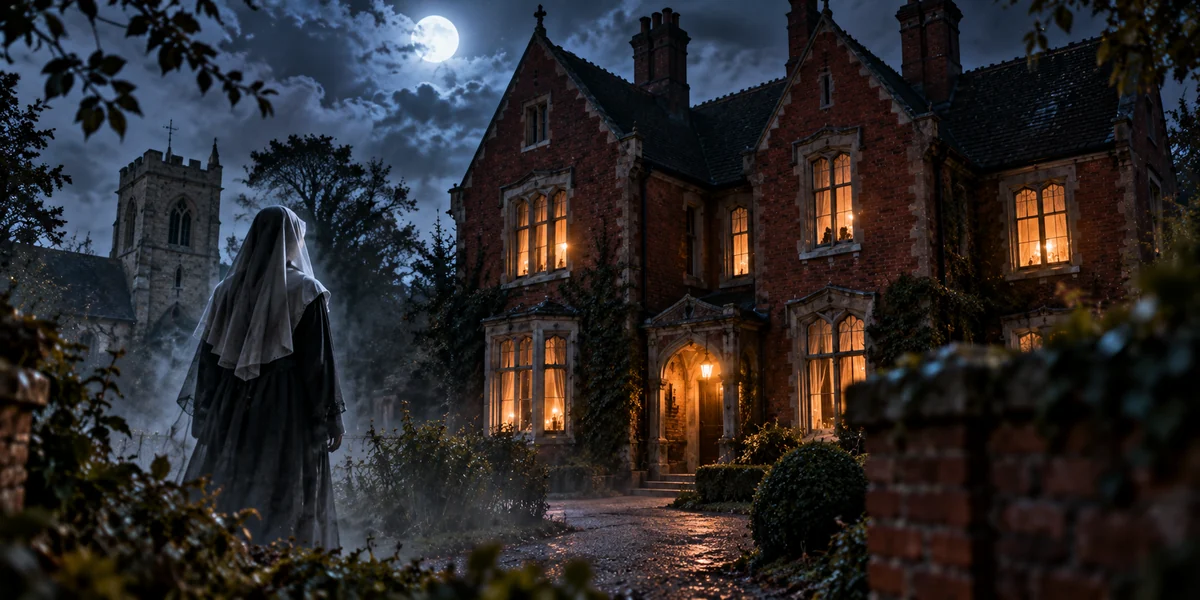
According to the legend, the islanders hadn’t simply discovered a wrecked ship. They had deliberately lured it toward the rocks using a false light, hoping to steal its valuable cargo. Once the vessel ran aground, the story claimed, the islanders robbed the passengers and set the ship on fire to destroy the evidence.
One woman supposedly remained aboard as the flames spread. Different versions describe her being abandoned, refusing to leave, or becoming trapped while the vessel burned. Her screams were said to carry across the water as the ship disappeared.
That woman became one of the most frightening parts of the legend. People claimed that when the ghost ship appeared, her cries could sometimes be heard above the waves.
The surviving records don’t describe the islanders deliberately burning the vessel with someone aboard. But the tale became so deeply rooted in local folklore that it was repeated for generations.
A Famous Poem Spread the Haunting
In 1867, American poet John Greenleaf Whittier published The Palatine, a poem based on the Block Island legend. Whittier turned the story into a dramatic tale of greed, cruelty and supernatural revenge. His poem introduced the haunting to readers far beyond Rhode Island, helping make the Palatine one of New England’s best-known ghost ships.
The people of Block Island weren’t pleased. Local residents objected strongly to the suggestion that their ancestors had murdered helpless travelers for profit.
Whittier later acknowledged that his account had treated the islanders unfairly. But by then, the poem had already helped turn a local story into a lasting legend.
There was also something Whittier couldn’t have invented. Reports of mysterious lights near Block Island had been written down more than fifty years before his poem appeared.
People Kept Seeing the Ship
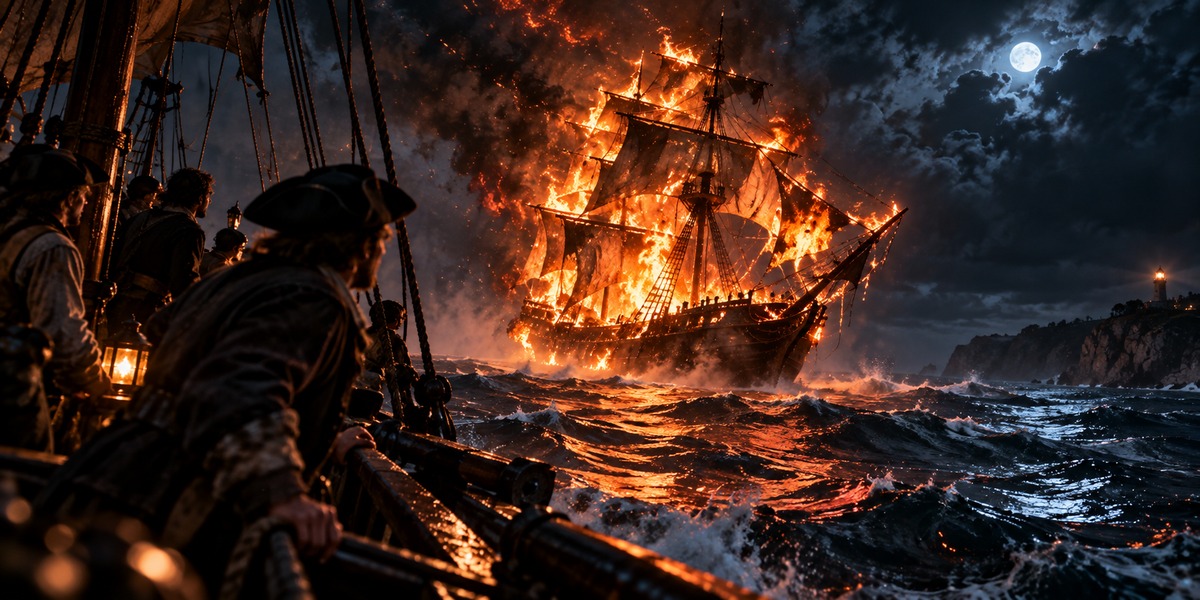
Over the years, witnesses continued describing strange sights beyond the island’s shores. Some reported a distant glow that shifted and flickered. Others claimed they could make out the sails and rigging of a large ship surrounded by flames.
The appearances were often associated with the days around Christmas and New Year’s, close to the anniversary of the original wreck. According to some accounts, the burning vessel would remain visible for a while before sinking beneath the water or disappearing into the darkness. People who went looking for wreckage found nothing floating where the flames had been.
On December 27, 1912, a Block Island resident named Warren Ball was looking out from his cottage during a fierce winter storm when he spotted what appeared to be a ship burning offshore.
Heavy snow and powerful winds were sweeping across the island, yet Ball believed he could see a vessel on fire through the terrible weather. It was exactly 174 years after the Princess Augusta had wrecked.
The Mystery That Stayed With the Island
By the twentieth century, the Palatine Light had become a familiar part of Block Island’s history. Generations had grown up hearing about the strange appearances, and the legend was passed from parents to children.
Researchers suggested possible explanations, including unusual atmospheric conditions and electrical activity over the ocean. But the stories continued to fascinate people, especially those describing flames that appeared to take the shape of a sailing ship.
Historians also became interested in the original disaster. Records helped establish the vessel’s real name and the terrible conditions its passengers had endured. Historian Jill Farinelli later spent years researching the wreck, publishing a book in 2017 that traced how the tragedy became one of America’s most enduring maritime ghost stories.
By the time Warren Ball reported his sighting in 1912, nobody alive could remember the original voyage.
Yet witnesses were still describing something burning on the water.