Haunting Encounters
The Nun Who Said 50 Demons Were Fighting Inside Her
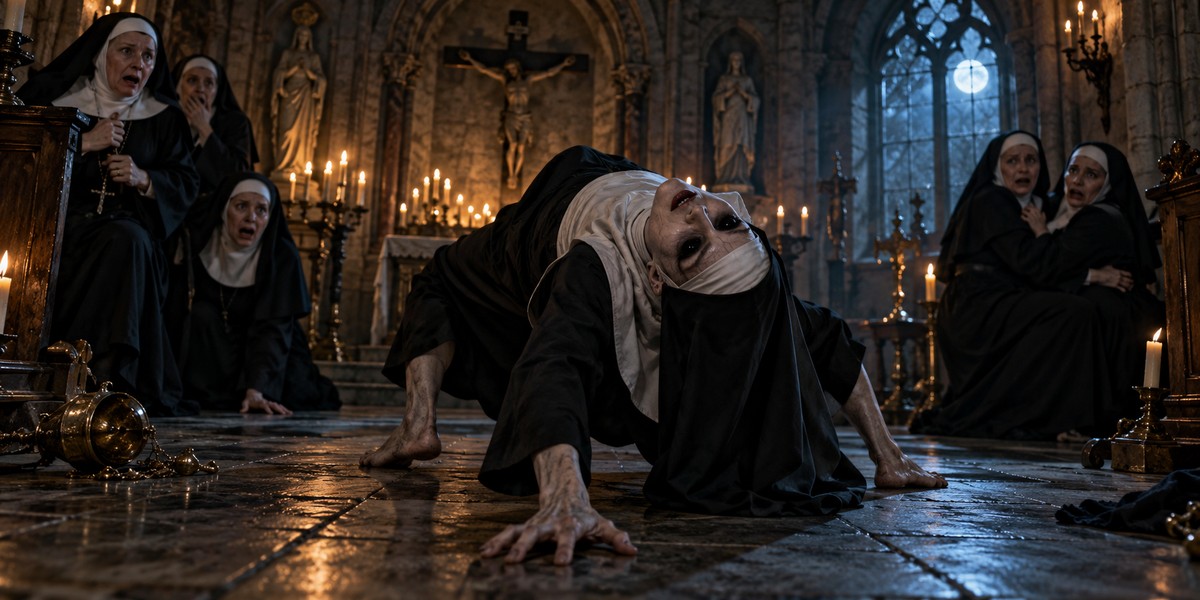
In April 1584, a 25-year-old nun named Jeanne Féry was brought before church authorities in Mons, in what is now Belgium. She suffered violent attacks, sometimes couldn’t speak and occasionally behaved so differently that the people around her barely recognized her.
On April 12, during questioning by the clergy, a voice identified itself as Namon. Jeanne insisted that it belonged to a demon living inside her.
The priests began investigating, and Jeanne told them something they hadn’t expected. She believed the trouble had started when she was a little girl.
The Demon Who Raised Her
According to the account she later wrote, a demon named Cornau first appeared when she was about four years old. He looked like a handsome young man and offered her sweets, affection and protection.
Jeanne described a difficult childhood, and Cornau became a comforting presence. She believed he had entered her life after her father cursed her when she was very young.
Another being, Garga, supposedly protected her from physical pain but could also interfere with her ability to speak. As Jeanne grew older, she claimed more spirits joined them. Some stopped her from praying or receiving Communion, while others frightened her, interfered with her memory or made her behave in ways she couldn’t remember afterward.
She also described making promises and signing agreements that gave the spirits power over her. To Jeanne, these weren’t mysterious strangers who had suddenly appeared. She believed she had known some of them for most of her life.
The Nuns Could Barely Control Her
During the spring and summer of 1584, Jeanne’s condition became increasingly frightening. She experienced episodes of violent agitation, trembling and screaming. Sometimes she refused food or couldn’t sleep, leaving the women caring for her exhausted.
Sister Barbe, one of the nuns assigned to watch over Jeanne, spent long hours trying to comfort and restrain her during the worst attacks. The priests arranged prayers, visits to religious sites and exorcism rituals. Jeanne occasionally became calmer, but the improvement might last only a short time before another episode began.
One incident especially troubled the clergy. Jeanne had secretly kept Communion wafers, and returning them to a priest named Jean Mainsent caused her terrible distress. During other attacks, she spoke or acted so differently that witnesses believed another personality had taken control.
Sometimes Jeanne later remembered very little of what had happened. The priests began keeping careful records of these episodes, hoping to understand what was happening and how they might help her.
A Saint Appeared to Help Her
Not every supernatural figure Jeanne described was an enemy. She repeatedly spoke about seeing Mary Magdalene, whom she believed was protecting her from the demons. Sister Barbe placed an image of the saint near Jeanne’s bed, and the young nun took comfort from believing she wasn’t facing her ordeal alone.
On August 25, 1584, Jeanne reported that Mary Magdalene had spoken to her. That same day, she signed a document declaring that she wanted to break her agreements with the spirits. The priests were encouraged, but Jeanne was still frightened by the possibility of losing Cornau.
He had occupied an important place in her childhood, and she worried about what would happen if he disappeared. Jeanne feared she might lose the ability to speak or understand the world around her. Father Mainsent decided to try something unusual.
The Priest Offered to Become Her Father
In November 1584, Jeanne explained her fears to Mainsent. Rather than simply ordering Cornau to leave, the priest offered to take his place as someone she could depend on. He promised to become a father figure, helping her through the frightening changes she believed were happening inside her.
Jeanne then asked the archbishop to become her grandfather. He agreed, giving her another person she could turn to when she felt afraid. It was an extraordinary arrangement for a sixteenth-century exorcism, with the clergy offering personal reassurance alongside prayers and religious rituals.
The arrangement brought periods of improvement, but the attacks continued into the following year. Jeanne still experienced frightening changes in her behavior, and the priests struggled to bring the ordeal to an end.
The Number of Demons Reached Fifty
By the spring of 1585, Jeanne had been receiving treatment for almost a year. At one point, she returned to her convent after rumors spread about the amount of time she was spending under the archbishop’s supervision. Severe episodes soon returned, and Jeanne reportedly trembled violently and struck the archbishop and his assistants with unexpected strength.
Meanwhile, her descriptions of the demons had become remarkably detailed. She identified different personalities, explained what each one supposedly controlled and described an entire hierarchy. Bélial was presented as a powerful leader commanding spirits associated with various sins.
Some were said to interfere with her thoughts, while others caused physical suffering or prevented her from participating in religious ceremonies. Eventually, the number of demons identified in the records reached fifty.
The priests continued their efforts, sometimes staying with Jeanne through prolonged attacks. By autumn, they had been trying to free her for more than eighteen months, and there was still no sign that the ordeal was over.
All Fifty Were Said to Leave on One Day
On November 12, 1585, Jeanne experienced what the surviving account describes as her final great confrontation. She gathered the people who had cared for her as another severe episode began. During the ordeal, she reportedly entered a trance and began singing a psalm in Latin.
The witnesses described a terrifying struggle. Jeanne’s body shook violently, and the demons were said to fight one another while the priests prayed over her.
According to the record, the named spirits began departing one after another. By the end of the confrontation, the clergy believed all fifty had left.
Jeanne later reported that Mary Magdalene had instructed her to reveal what she had experienced. She began writing a detailed account, describing the names, personalities and actions of the beings she believed had tormented her.
The result was unusual for its time. Instead of relying entirely on priests’ descriptions, the record preserved Jeanne’s own account of what the experience had felt like.
Jeanne Returned to Ordinary Life
The priests continued watching Jeanne after the final confrontation, concerned that another attack might occur. On January 6, 1586, she reported another religious vision during Mass. Afterward, she told the archbishop that she had regained her strength.
She was eventually considered well enough to resume life with the other nuns, without the extraordinary supervision she had required during her illness.
Her account was published in 1586, preserving an unusually personal record of a case that had occupied church authorities for nearly two years.