Haunting Encounters
Different Faces Kept Appearing on Their Kitchen Floor
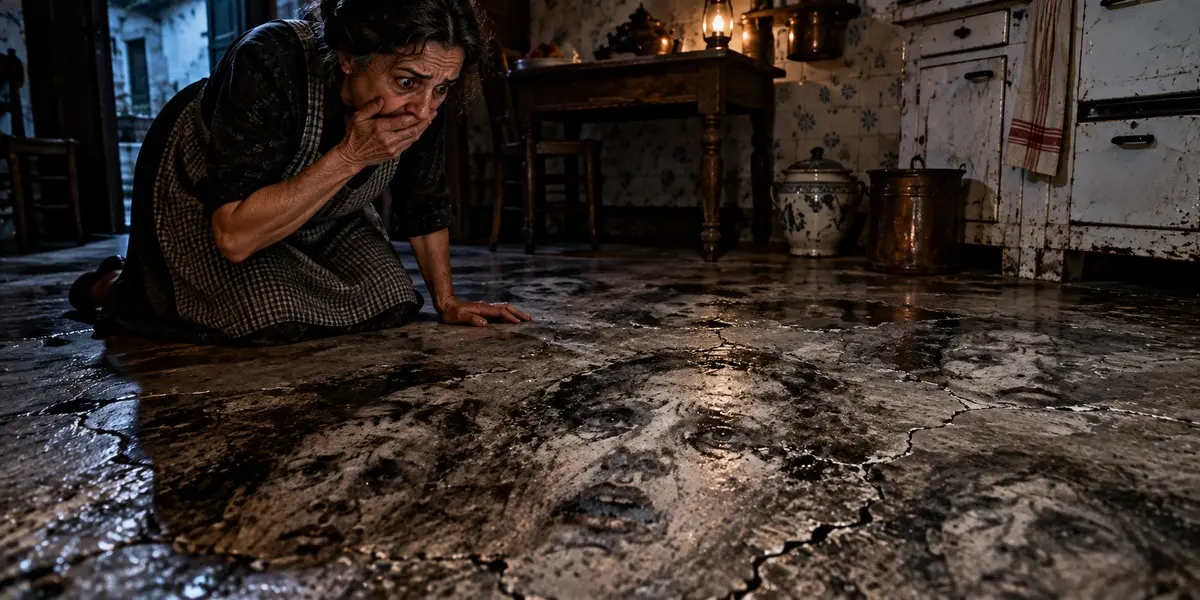
On August 23, 1971, María Gómez Cámara noticed something strange on the concrete floor of her kitchen in Bélmez de la Moraleda, a small town in southern Spain. A dark stain had appeared, and it was beginning to look like a human face. As the features became clearer, María could make out what looked like eyes, a nose and a mouth.
She showed her family, then her neighbors. Before long, people were coming into the house just to see the strange image forming beneath her feet. María’s son Miguel had enough. His mother was already struggling with an illness, and the constant stream of visitors was making life miserable.
He grabbed a pickaxe and broke apart the concrete where the face had appeared. Then he covered the damaged area with fresh cement. He thought that would be the end of it.
The Face Came Back
According to Miguel, only three days passed before another face appeared in the new concrete. The family couldn’t believe it. They had destroyed the original surface, poured fresh material over the spot and watched another image emerge.
By this time, the story had reached local officials. The mayor of Bélmez intervened and ordered the family not to destroy the new face. Instead, the section of concrete was cut out and preserved. It would eventually become one of the most famous objects associated with the haunting.
But the strange activity wasn’t confined to one patch of flooring. Before long, other faces reportedly began appearing around the kitchen and nearby rooms. Some looked like men, while others resembled women or children.
Certain images appeared clearly defined, but others looked more like dark stains that gradually developed recognizable features. The family began giving them names.
The Faces Had Names and Expressions
One of the most famous images became known as La Pava. It had dark eyes and an open mouth that gave it a haunting expression.
Another was called El Pelao, meaning the bald man. There was also El Fraile, named because it reminded the family of a friar. An image called La Familia appeared to show several people together, including adults and children.
What made the phenomenon especially strange was the way the images reportedly changed. Some became darker, while others gradually faded. Witnesses also described faces appearing to change expression or develop new features.
Newspapers began publishing pictures, and the modest house on Calle Real became famous throughout Spain. People traveled from other towns to see the images for themselves. Some arrived expecting to find an elaborate trick, while others believed they were witnessing something supernatural.
María continued living there as the visitors came and went. The house soon acquired a new name: La Casa de las Caras, the House of the Faces.
They Dug Beneath the Kitchen
In late 1971, investigators decided to look beneath the concrete. Workers excavated an area below the kitchen floor, eventually reaching a depth of approximately 2.8 metres. During the digging, they reportedly discovered human bones.
The discovery brought an entirely new possibility into the story. According to accounts of the excavation, the property stood over an area associated with old burials. Some people began wondering whether the faces were connected to the people whose remains had been found beneath the house.
The bones were removed and reburied, but reports of the faces continued. For residents who already believed the images were supernatural, the discovery made the kitchen even more unsettling. They weren’t simply looking at strange markings in concrete anymore. There were actual human remains beneath the place where the faces had appeared.
Investigators Tried Sealing the Floor
As the story spread, researchers from outside Bélmez became interested. Spanish parapsychologist Germán de Argumosa and German researcher Hans Bender were among the best-known investigators associated with the case. They wanted to observe the images over time and determine whether they were genuinely changing.
One experiment involved covering part of the floor with a transparent material and restricting access to the area. Investigators hoped they could watch the images develop without anyone being able to touch the concrete.
Reports described changes in the markings during the observation period, although problems with the documentation prevented the experiment from settling the argument. Researchers photographed the faces, compared images taken at different times and studied the changing patterns.
The debate became almost as famous as the haunting itself. Some investigators believed the images had been deliberately created or altered, while others remained fascinated by the reports of new faces emerging under observation. Meanwhile, María and her family had to continue living in the middle of it all.
María’s Kitchen Became a Tourist Attraction
The crowds didn’t disappear after the first excitement faded. Throughout the following decades, people continued visiting the house, sometimes bringing cameras and asking María to show them her most famous faces.
Her son Miguel later recalled how difficult the earliest years had been. His mother was suffering from brucellosis, an illness sometimes called Malta fever, and the steady arrival of strangers had been exhausting.
But as the years passed, the images became part of the family’s everyday life. María died in 2004, having spent more than thirty years living in the house that had made her famous.
After her death, Miguel noticed something curious. The appearances seemed to become less frequent, and some of the familiar images gradually faded. For a while, it looked as though the extraordinary activity might be coming to an end.
New Faces Appeared Years Later
In 2016, a Spanish journalist visited the house and met Miguel, who was still showing people the concrete floor. Miguel pointed toward a faint marking and explained how he could see a new face developing within another image.
When the journalist had trouble recognizing it, Miguel took out his phone and used its camera to provide a closer look. He also showed pictures of older images that had disappeared, including the group known as La Familia.
The town had embraced its unusual reputation. An interpretation centre was established to explain the history of the faces, and visitors continued making the journey to Bélmez.
In March 2024, paranormal researcher Kirsten A. Thorne visited the house with family members. She later described how difficult the markings were to recognize at first.
But after Miguel pointed out their features, she began noticing face-like shapes across the concrete. She took numerous pictures and later wrote about the experience, saying she found the changing images fascinating.
More than fifty years after María first noticed that strange stain, people were still traveling to her kitchen.