Haunted Places
They Rented Scotland’s Most Haunted House Just to Find Out What Was Inside
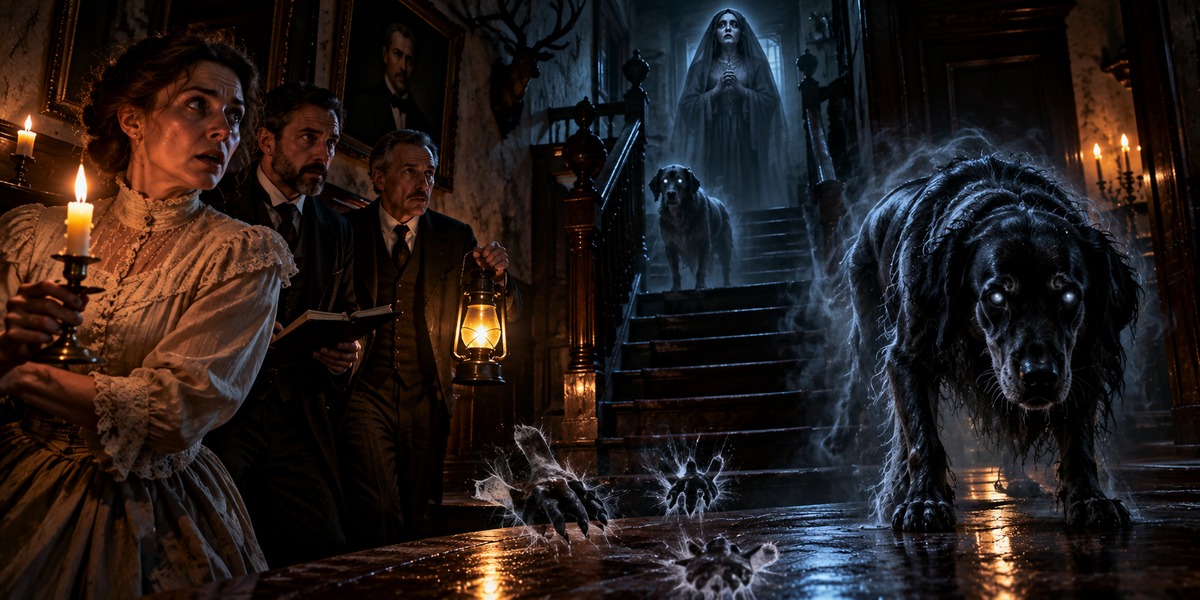
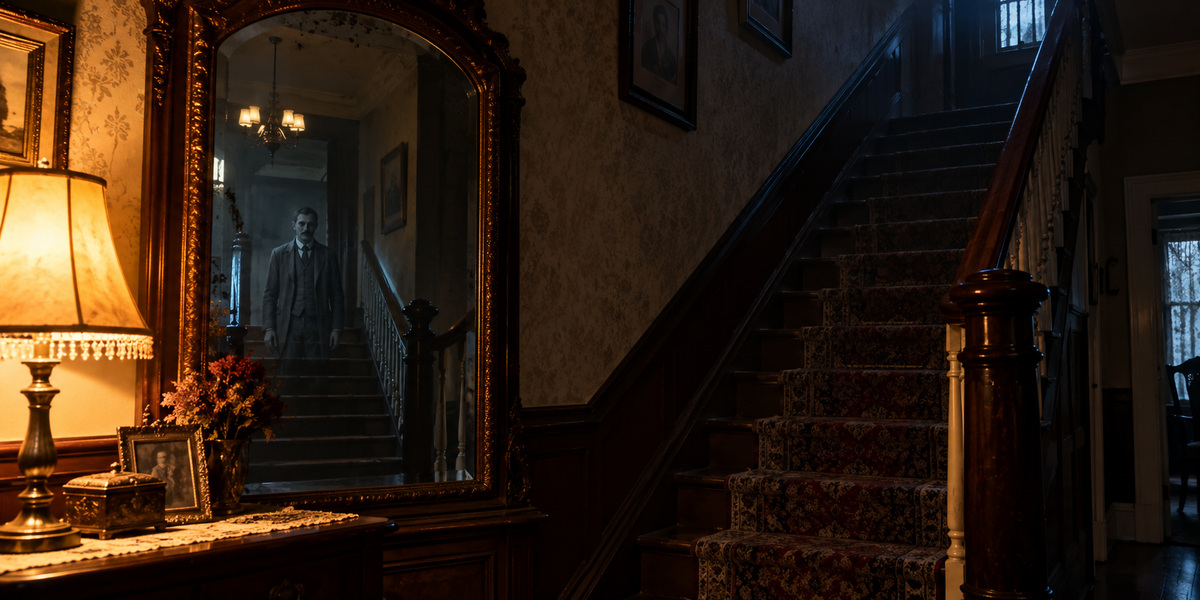
On February 17, 1897, five people were sitting in the drawing room of a Scottish country house when they heard footsteps moving around upstairs. Two women hurried up to investigate. The bedroom where the sounds appeared to be coming from was empty, the lights were out, and nobody was anywhere nearby.
Later that evening, all five heard a loud metallic clanging noise. It happened four times, even though the household servants had apparently gone to bed.
The visitors were staying at Ballechin House in Perthshire, a property with such a frightening reputation that a wealthy Scottish nobleman had arranged to rent the entire place for months. He wanted to find out what was happening there, and he had assembled a group of investigators willing to live in the house.
A House With a Strange History
Ballechin House had belonged to the Steuart family for generations. One of its former owners, Major Robert Steuart, was especially fond of his dogs and reportedly believed that after his death, his spirit could return inside one of them.
When he died in 1876, his successor supposedly had all fourteen of the major’s dogs killed to prevent that from happening. But the house soon developed a reputation for strange activity. Later occupants reported hearing animals running through rooms, mysterious knocking at night and voices coming from places where nobody was standing.
There were also stories about a ghostly woman and an elderly man who walked with an unusual limp. By the 1890s, Ballechin was being described as Scotland’s most haunted house.
John Crichton-Stuart, the 3rd Marquess of Bute, had heard these stories years earlier. He was fascinated by ghosts and wanted to investigate the property himself. Rather than send someone to spend a night there, he decided on something much more ambitious.
They Moved Into the Haunted House
In early 1897, Colonel Le Mesurier Taylor arranged to rent Ballechin House for several months. Ada Goodrich Freer, a paranormal investigator who sometimes wrote under the name Miss X, helped organize the investigation.
Freer arrived on February 2 with a companion. Other investigators and guests came and went throughout the following months, while household servants continued their regular work.
The idea was to live in the house normally and keep a careful record of anything unusual. Visitors were encouraged to write down what they experienced, including the time, location and who else had been present.
The house had plenty of bedrooms, and the visitors soon found that some seemed more active than others. They began keeping track of which rooms produced the most reports.
The Noises Started Almost Immediately
Early on February 4, Freer and her companion, Miss Moore, were awakened by a loud clanging sound that echoed through the building. Freer compared it to someone striking a large metal bar with a wooden hammer. Neither woman could find the source.
On February 13, Freer woke around 5:30 in the morning to what sounded like something enormous falling onto the floor above her. Miss Moore heard it too, but the servants sleeping upstairs couldn’t explain what had happened.
One earlier account was especially frightening. A man staying at Ballechin said he had been awakened by his bedclothes lifting away from his body. He grabbed them around his neck, but something continued pulling them upward.
He reached toward a box of matches beside the bed and felt as though an invisible hand was stopping him. Afterward, he claimed to have heard breathing close to his face, even though he couldn’t see anyone.
The Dogs Were Even Stranger
The old stories about Major Steuart took on a new meaning when visitors began reporting experiences involving animals. In one bedroom, Freer and Miss Moore heard what sounded like a dog running around. They initially assumed it was their own dog, until they noticed it sleeping quietly on the floor.
On another occasion, the animal reportedly sat watching something move across the room. Its head slowly turned as though following somebody neither woman could see. Freer’s small Pomeranian became so frightened in one bedroom that she eventually moved to another room to spare it further distress.
On May 4, Freer reported an especially bizarre experience. She woke to hear her dog crying and saw two black paws resting on a table beside her bed. There was no visible body attached to them.
She wanted to wake the woman sleeping beside her but decided against it because her companion had already endured a difficult night.
A Weeping Nun Appeared Outside
The strange experiences weren’t confined to the building. During a session involving automatic writing, Freer and her companions received instructions to visit a nearby wooded glen at dusk.
They went together, walking into the snowy countryside near the house. Freer said she saw a dark figure moving slowly along the hillside.
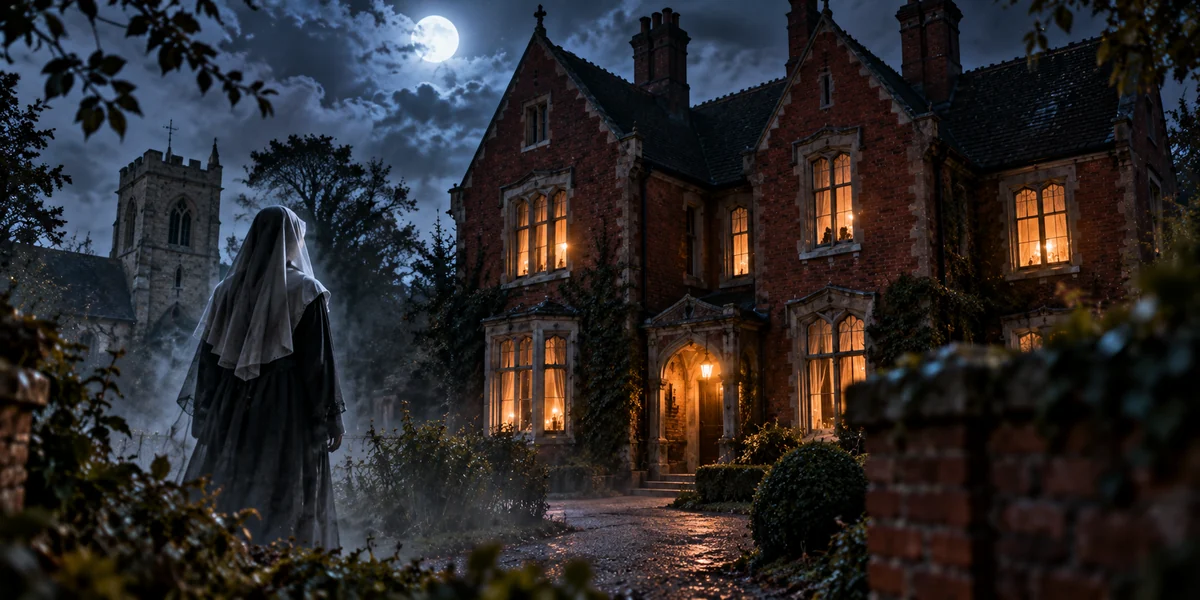
It appeared to be a woman dressed as a nun. The figure stopped and looked toward her before moving farther along the slope and disappearing among the trees.
Her companions hadn’t seen the woman, but on later visits some reported hearing voices coming from the same area. Freer returned several times and claimed to see two women together, one apparently crying while the other spoke to her. The investigators never discovered who the women might have been or why they appeared near Ballechin.
Even the Investigators Couldn’t Agree
As word spread, Ballechin began attracting attention from newspapers and the Society for Psychical Research.
Frederic W. H. Myers, one of the society’s leading figures, visited and later said the evidence wasn’t strong enough for publication in its official proceedings. Other investigators disagreed, and a public argument broke out over what had really happened inside the house.
Freer and Lord Bute continued defending their work. In 1899, they published The Alleged Haunting of B—— House, a book containing the journal, witness statements and reports collected during the investigation.
The book included an extraordinary amount of detail, even on days when nothing unusual happened. Readers could follow the events almost night by night rather than relying on a handful of ghost stories.
Ballechin eventually fell into disrepair. By the twentieth century, the building stood largely empty, and most of it was demolished in 1963 after a fire.
During the investigation, the visitors had tried locking unused bedrooms to make sure nobody could enter them.
According to their journal, the footsteps continued behind those locked doors.