Haunting Encounters
They Tried to Bury the Skull. The Screaming Made Them Bring It Back
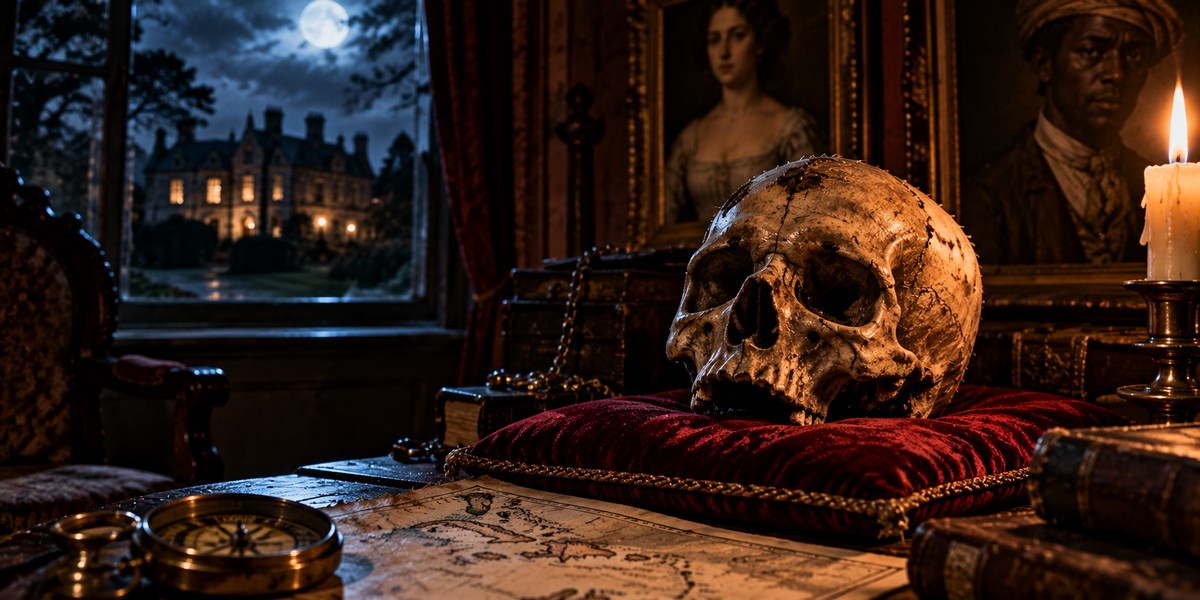
In 1883, three visitors climbed the stairs of an old manor house in Dorset, England, looking for something they had heard about but hadn’t quite believed.
Behind a cupboard door, a steep staircase led toward the attic. Sitting on one of the steps was a human skull, missing its lower jaw. The woman who lived there reluctantly allowed the visitors to examine it, but she wasn’t nearly as accommodating when they explained what they wanted to do next.
They wanted permission to bury the skull in the churchyard and spend the night in the house to see what happened. She refused and promptly sent them away. At Bettiscombe Manor, there were some things you simply didn’t do with the skull.
A Skull That Couldn’t Leave the House
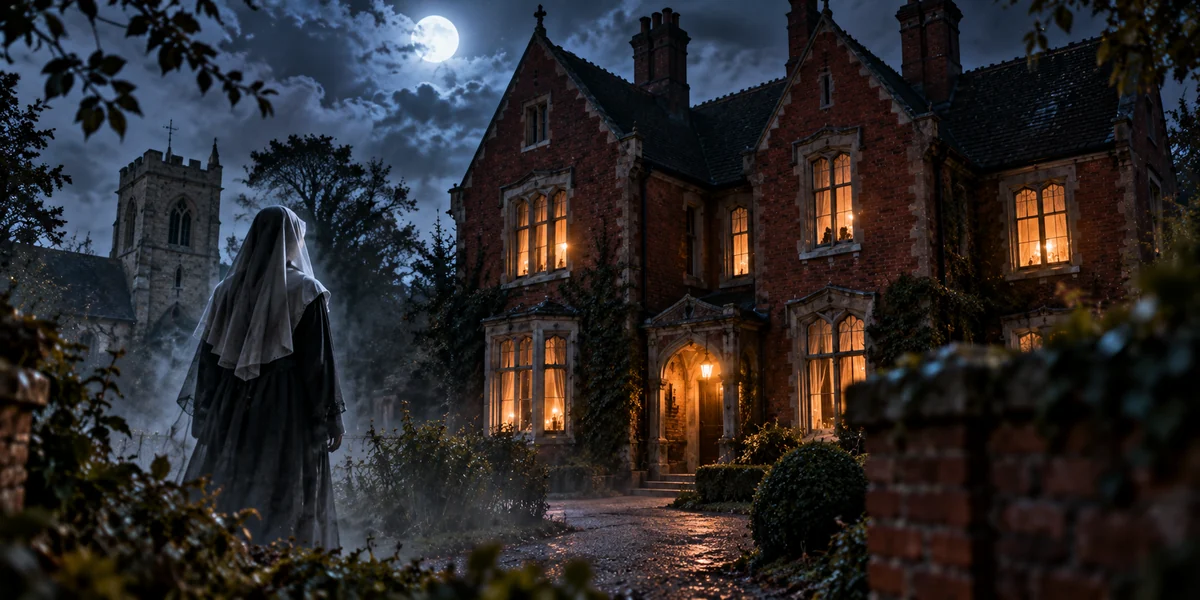
Bettiscombe Manor stood in the quiet countryside of Dorset, surrounded by farmland and rolling hills. The house had belonged to the Pinney family for generations, and somewhere along the way, a human skull had become one of its permanent residents.
Nobody seemed entirely certain how it had arrived. But the people who lived there inherited a warning along with it: never take the skull outside.
According to an account published in the nineteenth century, removing it would cause the house to shake so violently that it might collapse. The person responsible was also supposed to die within a year.
Other versions described terrible screaming, rattling windows and mysterious noises whenever somebody tried to get rid of it. The disturbances supposedly stopped only when the skull was returned.
Over the years, families moved in and out, furniture was replaced, and the house changed hands. But the skull stayed.
The Servant Who Wanted to Go Home
The best-known explanation for the haunting involved the Pinney family’s connections to the Caribbean, where they had owned plantations.
According to the legend, a Black servant had been brought to England from the island of Nevis. Before he died, he begged to have his body returned to his homeland for burial. His wishes were ignored, and he was buried in the churchyard at Bettiscombe.
Soon afterward, people supposedly began hearing terrible screams coming from his grave. At the manor, doors slammed, windows rattled and strange noises disturbed the household. The haunting became so unbearable that the family finally had the body dug up.
The disturbances stopped when the remains were brought back into the house. Over time, the rest of the skeleton supposedly disappeared, leaving only the skull.
It was a frightening story, especially for anyone who had to live with the object. And by the late nineteenth century, its reputation was attracting visitors who wanted to see the famous skull for themselves.
Three Visitors Wanted to Test the Legend
In August 1883, Richard Garnett of the British Museum visited Bettiscombe with his daughter and a friend. They had heard about the skull while staying in nearby Charmouth and decided to investigate.
The woman living at the manor had only recently moved in and wasn’t particularly eager to discuss her unusual inheritance. After some persuasion, however, she led them upstairs and showed them where it sat.
The visitors picked up the skull and examined it carefully. One of the party, who had medical training, offered an opinion about the person it might once have belonged to.
Eventually, the woman told them what she knew about the haunting, including the story that burying the remains would bring the screaming back. Rather than being frightened away, the visitors became even more interested. They proposed an experiment: let them bury the skull and stay overnight to hear the results.
The woman wanted absolutely nothing to do with that idea. Their visit came to an abrupt end, and the skull remained exactly where it was.
Another Visitor Took It Back to the Attic
The folklorist J. S. Udal also visited Bettiscombe during the 1880s. He brought two clergymen along, apparently figuring that having some religious company couldn’t hurt.
By this time, the skull had been placed on a staircase leading toward the attic. The woman living there was worried that one of the household dogs might carry it away, so Udal offered to put it somewhere safer.
He took a candle and carefully climbed into the attic with the skull in his hands. The floorboards were old and badly damaged. The roof had openings that allowed bats, owls and other birds to get inside, and the room had clearly been neglected for years.
Near a large chimney, Udal found the skull’s former resting place: a single brick set into a small space beside the chimney wall. He carefully returned it there.
During his visits, Udal also noticed a strange opening in the attic floor and a separate little room with blocked-up windows. He wondered whether part of the house had once been used as a hiding place.
It gave him another possibility to consider. There were rumors that the skull belonged to a young woman who had been kept prisoner in the house, rather than the servant described in the better-known story.
Someone Threw the Skull Into a Pond
Udal recorded another tale involving a former tenant who apparently had no patience for the superstition. According to the account, the man became angry with the skull and threw it into a duck pond across from the house. That didn’t go well.
The tenant reportedly began experiencing frightening noises and disturbances around the property. Eventually, the skull was retrieved from the water and returned to the manor. Whether the man really heard anything supernatural is unknown, but the story became another warning for anyone thinking about removing it.
By the end of the nineteenth century, Bettiscombe’s skull was famous enough to attract curious visitors from outside the area. Udal even suggested keeping a donation box in the hall so people coming to see it could contribute toward repairs at the local church.
The Skull Had a Surprise in Store
In June 1962, the skull finally received a professional anatomical examination. Researchers wanted to learn who it might have belonged to and whether the old story about the Caribbean servant was accurate.
The results were unexpected. The skull most likely belonged to a European woman who had died between the ages of twenty-five and thirty. It was relatively small, lightly built and missing its lower jaw.
The examiner also noticed changes in the bone suggesting it had once spent time underground. One possibility was that an ancestor of the Pinney family had discovered the skull in an old burial site and brought it home.
Nobody could establish when the woman had lived, how she died or why her remains had ended up at Bettiscombe Manor.
The findings were recorded by the Dorset Natural History and Archaeological Society, and the skull remains listed in Dorset’s official historical records as an object of unknown age and origin.