Ghost Sightings
The Cheltenham Ghost Walked the Same Route for Seven Years
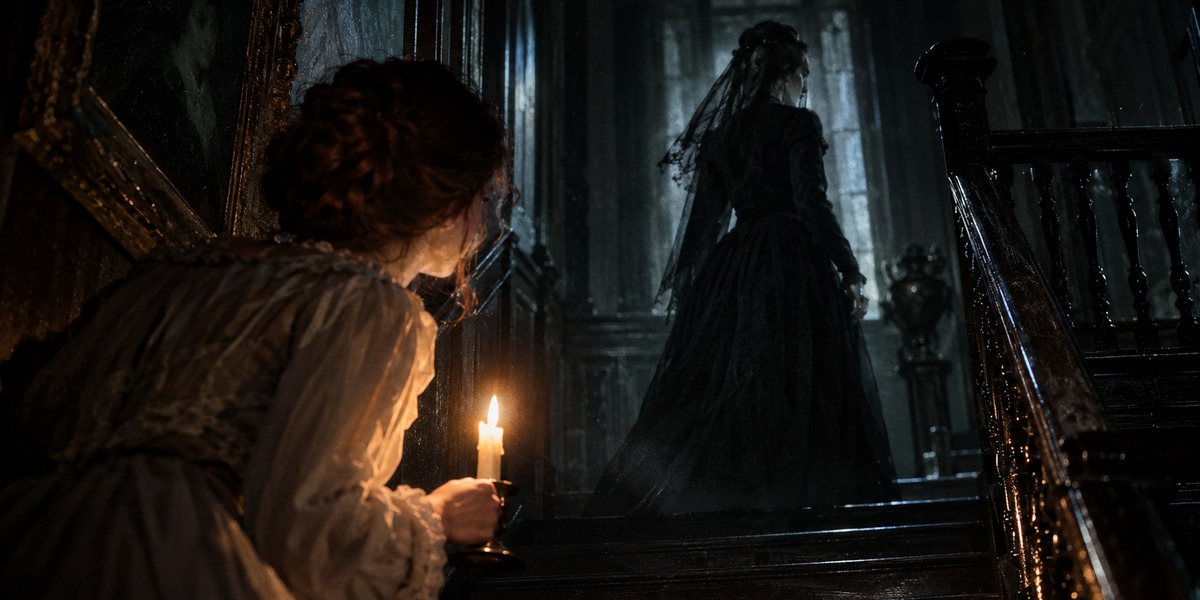
In June 1882, nineteen-year-old Rosina Despard heard someone outside her bedroom door. Thinking it was her mother, she opened it and stepped into the hallway.
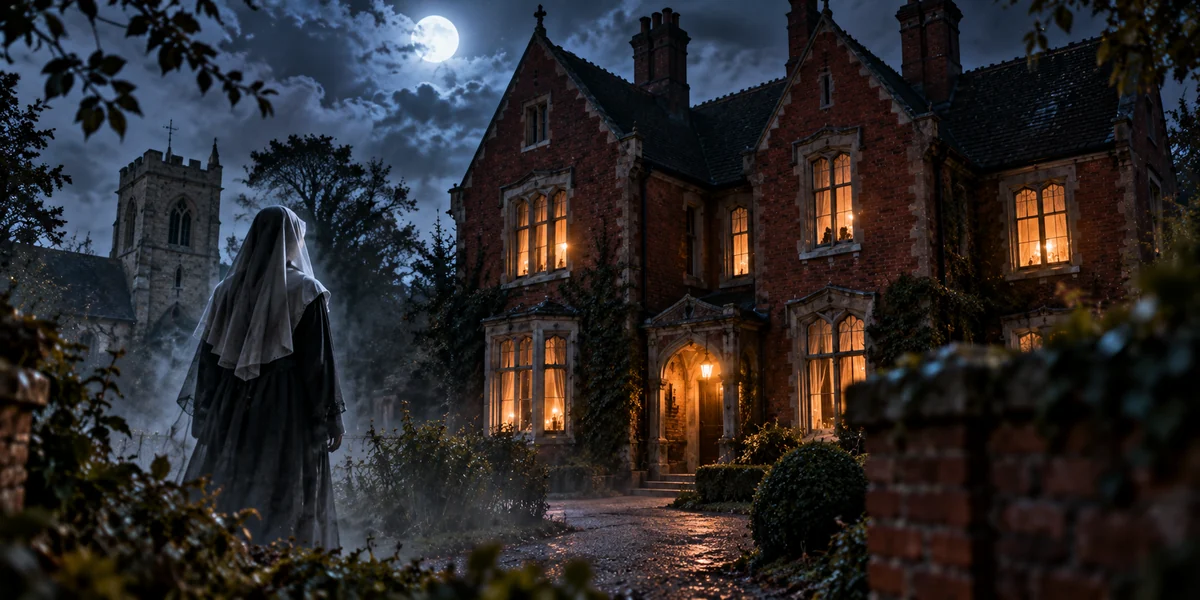
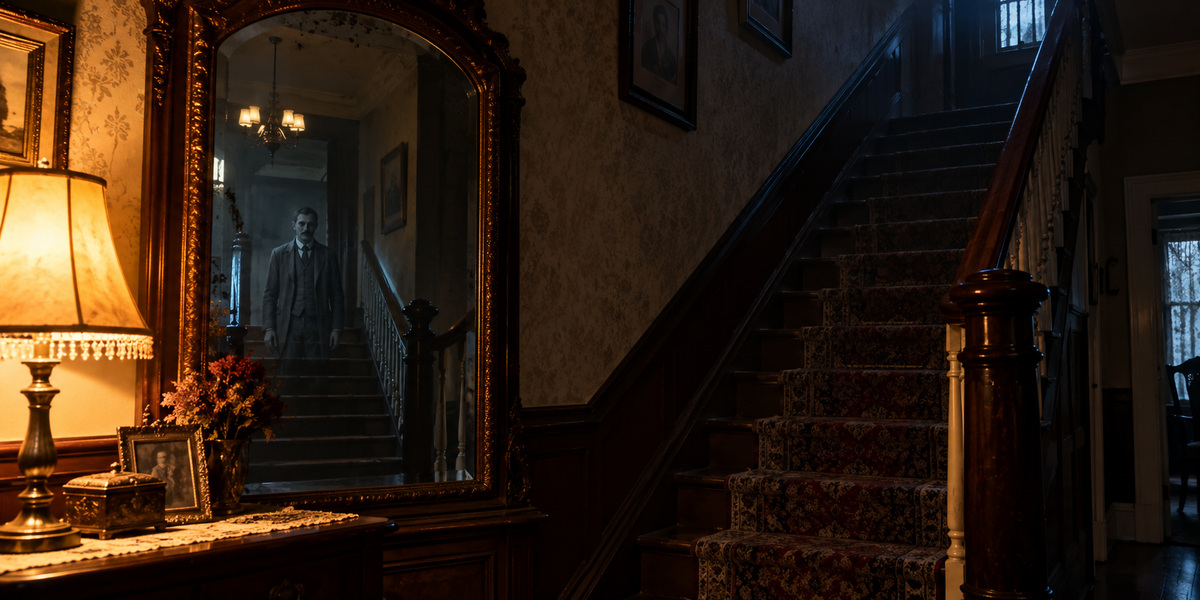
Nobody was there. But farther along the passage, she noticed a tall woman dressed entirely in black, standing at the top of the staircase. The stranger was holding a handkerchief over most of her face.
After a few moments, the woman began walking downstairs, and Rosina followed. She had only a small piece of candle to light her way, and before she could catch up, the flame went out.
Rosina returned to her bedroom, wondering who the mysterious visitor had been. She hadn’t heard the front door open, and nobody in the family seemed to know anything about the woman.
The Woman Kept Coming Back
The Despard family had moved into the large house on Pittville Circus Road in Cheltenham, England, only a few months earlier. Their father, Captain Frederick Despard, had rented the property for his wife and six children. Nobody had warned them about anything unusual happening there.
Over the following months, Rosina began seeing the stranger again. She wore what appeared to be a dark wool dress with white cuffs at the wrists, similar to those worn by widows.
Other members of the household eventually reported encounters of their own. Some saw a figure moving through the rooms, while others heard footsteps approaching when nobody was visible.
Rosina noticed that the woman seemed to follow a familiar path. She appeared near the stairs, passed through certain hallways and sometimes stood beside the drawing-room window. It was almost as though she were following an old habit, completely unaware that another family had moved into the house.
Rosina Decided to Test the Ghost
Rather than simply watch the woman, Rosina began conducting little experiments. She stretched thin threads across the places where the figure usually walked. If an ordinary person passed through, the threads should move or break.
According to Rosina, the woman crossed without disturbing them. It was a strange result, and it encouraged her to try something more ambitious.
Rosina attempted to approach closely enough to touch her. But whenever she got near, the figure seemed to move away or disappear before contact was possible.
On one occasion, she positioned herself so that the woman appeared to have no way out. Instead of passing her, the figure simply vanished.
She also tried taking a picture, but cameras in the 1880s required long exposure times, especially indoors. The woman never remained visible long enough for Rosina to capture a useful image.
There was another frustrating problem. Whenever Rosina deliberately waited somewhere hoping to catch the woman appearing, nothing happened. The encounters occurred unexpectedly, usually while the household was going about its ordinary activities.
One Night, Rosina Spoke to Her
On January 29, 1884, Rosina finally tried addressing the woman directly. Instead of ignoring her completely, the figure appeared to notice her and made a faint gasping sound. Rosina thought it sounded almost like a reaction of surprise.
During another encounter, she believed the woman’s expression suggested she wanted to answer but was somehow unable to speak. These moments fascinated Rosina. Until then, the stranger had mostly behaved as though the people around her didn’t exist, walking through the house without acknowledging anyone.
Now Rosina wondered whether the woman was actually aware of her presence. She kept looking for another opportunity to communicate, but the apparition never gave her a spoken answer.
Other Witnesses Stepped Forward
By the summer of 1884, Rosina was no longer the only person reporting unusual experiences. Family members, servants and visitors had described incidents involving the mysterious woman. Some initially mistook her for an ordinary guest, only realizing something was wrong when she disappeared.
The reports eventually attracted the attention of Frederic W. H. Myers, a leading member of the Society for Psychical Research.
The society had been founded in 1882 to investigate unusual experiences, including ghost sightings and claims of supernatural activity. Myers was particularly interested in cases involving several witnesses.
He began visiting the Despard household in 1886, interviewing people and collecting their written accounts. Rosina had already kept detailed notes, making it easier to compare what she had seen with the experiences of others.
Myers was impressed by how closely some of the descriptions agreed. He also took an interest in Rosina’s attempts to test the apparition rather than simply accept that it was a ghost.
In 1892, her account appeared in the society’s Proceedings under the name R. C. Morton. The family used a different surname to protect their privacy, which is why the haunting became known as the Morton Case.
They Found Someone Who Might Have Been the Ghost
As investigators looked into the property’s history, they learned about a former resident named Imogen Swinhoe. Imogen had been the second wife of Henry Swinhoe, who had lived in the house before the Despards arrived. Their marriage was reportedly unhappy, and Imogen eventually left her husband shortly before his death in 1876.
She died two years later, several years before Rosina’s first encounter. Rosina was eventually shown a picture of Imogen and thought she might be the stranger she had repeatedly seen.
The possibility intrigued her. Imogen had known the rooms and corridors long before the Despards moved in, and the figure’s mourning clothes seemed to fit the idea of a woman connected with the house’s past.
But Rosina couldn’t be certain of the identification. The stranger’s face had always been difficult to see, leaving her with little more than an impression to compare with the picture.
The Visits Slowly Came to an End
By 1887, the sightings were becoming less frequent. The Despards continued living in the property, but the experiences that had once occupied so much of Rosina’s attention gradually faded.
Around 1889, the regular appearances stopped. The family remained in the house for several more years before moving away in 1892.
The building later served other purposes, including use as a school and a convent, before eventually being divided into apartments.
Rosina went on to become a doctor, but her experiences at Cheltenham remained part of one of the best-known haunting investigations recorded by the Society for Psychical Research.